Does Real Gold Tarnish? What Discoloration Can and Cannot Tell You
Does real gold tarnish? This guide explains visible discoloration clues, what they mean for solid gold vs plated pieces, and safe next steps before testing.
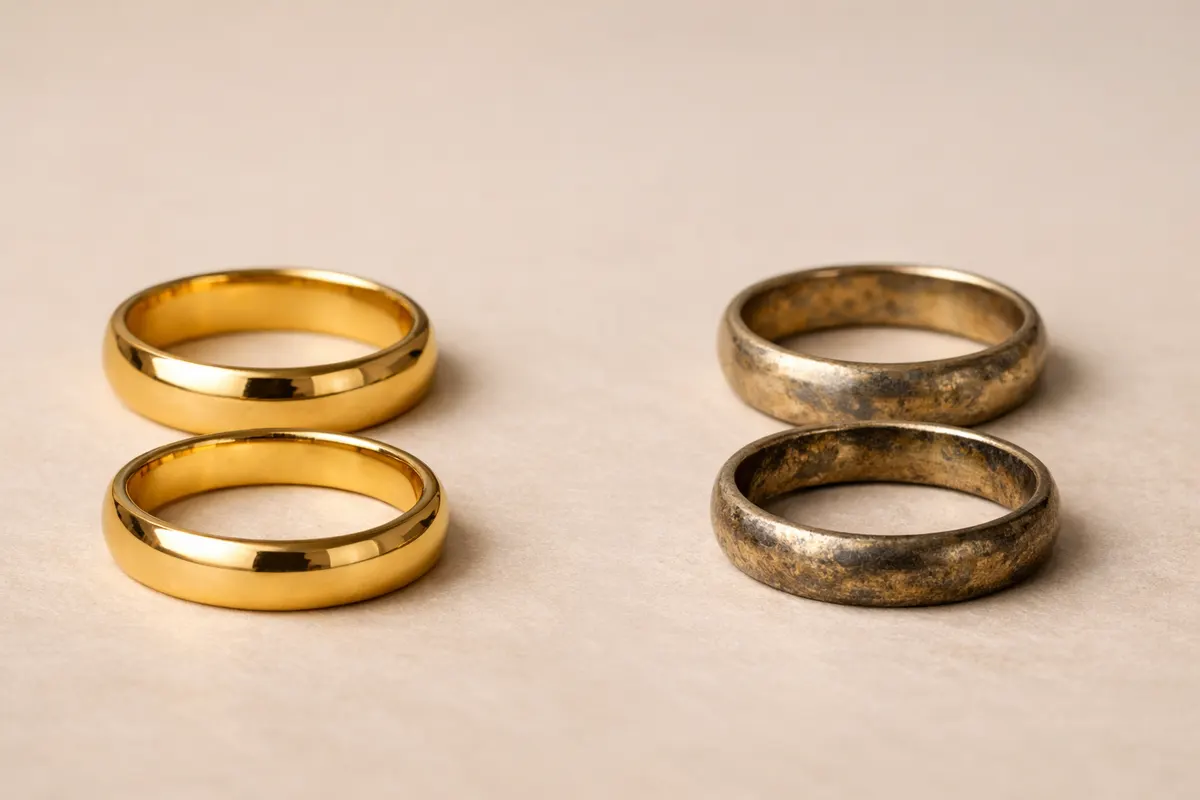
Quick answer: does real gold tarnish or not?
Does real gold tarnish? Pure gold (24 karat) does not tarnish or corrode under normal conditions because it is chemically inert; it resists oxygen, moisture and most acids. That means a solid 24K gold item should keep its color rather than develop a green, black, or dull surface film.
However, most jewelry and household gold objects are alloys — mixes of gold with silver, copper, nickel, or other metals. Those alloyed metals can and do tarnish, so a gold piece that changes color might be the non-gold metals reacting in the alloy or on the surface rather than the gold itself.
In short: pure gold does not tarnish, but the visible discoloration you see on many pieces can come from alloy metals, surface plating wearing off, environmental deposits, or dirt. Visual clues are useful but rarely definitive on their own.
- 24K (pure) gold: very resistant to tarnish and keeps its color.
- Alloyed gold (9K–18K): may darken, green, black or dull where other metals are exposed.
- Gold-plated or gold-filled pieces: surface plating can wipe, flake, or reveal base-metal oxidation.
- Surface deposits (dirt, lotions, sulfur-containing air): can mimic tarnish without indicating base metal.
What discoloration actually indicates about gold
When you see discoloration on a gold item, there are several distinct causes that point to different materials or conditions. Understanding which cause is most likely helps you decide whether the piece could be solid gold, an alloy, plated, or simply dirty.
Common causes: (1) exposed alloy metals — copper and silver in the alloy react and form oxides or sulfides, creating brown, black or green spots; (2) worn plating — gold leaf or electroplated layers rub off to show a darker base metal underneath; (3) surface contamination — body oils, sunscreen, bleach or sulfur can leave films that change appearance but wipe off; (4) environmental corrosion — seawater or acidic soils can produce pitting or crusts on non-gold metals.
Each cause produces different visual patterns. Alloy reaction typically appears where thin edges or high-wear points expose the core metal, plating wear follows high-contact areas like clasps and rings, and surface contamination often sits on top of the metal and can be cleaned away. Noting where and how discoloration appears is therefore more informative than color alone.
- Oxide/sulfide from alloys: black or brown patches, often at joins or scratched areas.
- Green staining: usually copper corrosion or copper salts reacting with sweat.
- Dull or uneven shine: could be surface grime, micro-scratches, or loss of plating.
- Bright yellow under wear: suggests thicker gold content or recent re-plating rather than corrosion.
Key clues
Start by observing where the discoloration appears and how it behaves when you clean the surface gently. True base-metal corrosion or plating loss often concentrates at edges, inside links, clasp backs, and the inside of rings where friction and exposure are highest. If discoloration is uniform across a flat, protected panel, consider surface deposits or intentional patina rather than metal breakdown.
Look for hallmarks, stamps, or engravings (e.g., 9K, 14K, 585, 750, 999). Stamps are helpful but not definitive because they can be faked or worn away. Combine hallmark presence with physical clues like weight and color tone. Higher karat gold is denser and tends to feel heavier for its size than base-metal lookalikes.
Examine color under good white light and compare to a known reference: 24K gold is a deep, warm yellow; lower-carats take on paler or redder tones depending on copper or silver content. Also note reactions after a gentle cleaning: if the dark film wipes off with a soft cloth and mild soap, it was likely surface contamination rather than tarnish of the metal beneath.
- Location of change: edges and contact points suggest wear or alloy exposure.
- Hallmarks: useful clues, but verify because stamps can be misleading.
- Weight and density: solid gold feels heavier than most base-metal copies.
- Color tone: redder tones imply more copper; paler tones suggest higher silver or lower karat.
Step-by-step workflow
Follow a simple, non-destructive workflow before you consider lab tests or paid appraisals. These steps are meant for initial triage — they reduce obvious lookalikes and help you decide when to escalate to a professional assay or XRF test.
1) Clean gently. Use mild dish soap, warm water, and a soft toothbrush to remove dirt and oils. Rinse and dry thoroughly. If discoloration disappears or lessens, it was surface contamination. Do not use abrasive cleaners or household acids.
2) Inspect hallmarks and construction. Use a loupe or magnifier under white light. Note any stamps, where they’re located, and signs of re-plating (sharp color edges near joins). Solid pieces are usually well-finished inside links and on hidden surfaces; cheap plating often leaves rough or uneven backs.
- Step 1 — Clean: mild soap, warm water, soft brush; dry with a lint-free cloth.
- Step 2 — Inspect: loupe, white light, locate stamps and examine seams.
- Step 3 — Weight & sound: compare heft to similar-sized items and listen for a solid, muted ring (not a tinny ping).
- Step 4 — Magnet test: use a small fridge magnet; strong attraction indicates ferrous base metals — but absence of magnetism is not proof of gold.
- Step 5 — Photo documentation: take sharp photos of both sides and the area of discoloration to compare over time or share with an expert.
Examples: real scenarios and what the discoloration meant
Example 1 — A yellow wedding band with pale green at the bezel: a green rim usually points to copper in the alloy reacting with sweat. The band may still be solid gold alloy, but the green staining came from copper salts migrating into the skin or onto adjacent metal. Cleaning the band and evaluating hallmark and weight helps decide whether to test further.
Example 2 — A gold-colored necklace that shows a dark base metal where the clasp rubs: this pattern strongly indicates gold plating over a cheaper alloy. Repeated wear at clasps removes plating fastest, exposing the darker substrate. If the underlying metal is visibly gray or silver-toned, it’s likely base metal or silver; if it’s reddish, it’s likely copper-rich alloy.
Example 3 — Flat decorative disc with an uneven dull surface after being stored in a cardboard box: cardboard and paper can off-gas sulfur or acids that leave surface films. These deposits often wipe away and do not mean the metal beneath is corroding. A gentle cleaning and smelling the storage material can reveal the real cause.
- Wedding band green rim = copper reaction; may still be solid alloy gold.
- Necklace clasp darkening = worn plating exposing base metal.
- Dull surface after storage = environmental deposit, often removable.
- Blackening at solder joints = silver or copper sulfide buildup where alloys meet.
Limitations: what discoloration cannot prove
Color and visible wear alone cannot confirm gold purity, authenticity, or monetary value. Many plated pieces imitate weight and color, hallmarks can be forged, and some base-metal alloys are intentionally matched to the visual tone of real gold. Photographs are even less reliable because lighting, camera white balance, and reflections change perceived color.
Certain destructive tests (acid scratch tests, file and acid swabs) can give a stronger indication but are not appropriate as casual home checks: they damage the item and can produce misleading results if the piece is plated or re-plated. Instead, limit yourself to non-destructive checks and use professional, instrument-based testing (XRF spectrometry or fire assay) for any value-sensitive items.
When to involve a professional: if the piece has potential high value, is an heirloom, or if you need a legal or saleable confirmation of karat — seek a trusted jeweler, assay office, or certified appraiser. If the item is low-value costume jewelry, visual checks and conservative assumptions (e.g., treat as plated) are usually sufficient.
- Visible color alone ≠ proof of karat or value.
- Photos can mislead—lighting and camera make metal appear different.
- Avoid home acid/scratch tests: they damage items and give false confidence.
- For sale, insurance, or legal needs, use certified lab testing (XRF or fire assay).
Related guides
Organize your visible evidence and next steps
If you want a structured first pass after your visual checks, use Gold Detector - Goldiva to collect clear photos and note hallmarks and wear areas. The app helps you record the clues described here and suggests the appropriate non-destructive follow-ups, but it does not replace professional assay testing for value or authenticity. Visit https://golddetector.app/ to start documenting your piece before a jeweler or lab appointment.


Frequently asked questions
Does real gold ever turn green on the skin?
Pure gold does not turn green. Green staining on skin usually comes from copper or brass in an alloy or a green residue from corrosion on a plated item. Perspiration, lotions, and acidic skin can accelerate copper salts forming and leaving green marks even when the visible metal looks gold. Cleaning the jewelry and the skin, or choosing higher-karat or gold-filled pieces, reduces green staining.
If a gold ring darkens, is it always fake?
Not always. Darkening can indicate exposed non-gold metals in an alloy (common in lower karats) or the wearing away of surface plating. It can also be tarnish from environmental deposits that wipe off. Combine visual checks — hallmarks, weight, and where the darkening occurs — before concluding the piece is fake. For a definitive answer, use non-destructive professional testing.
Can cleaning jewelry remove tarnish from real gold?
Cleaning can remove surface contamination and some sulfide films from alloys, but it will not change corrosive damage on exposed base metals. For true solid high-karat gold, regular gentle cleaning restores shine because the metal itself hasn't corroded. For plated items, cleaning may temporarily improve appearance but won’t restore missing plating where the base metal is exposed.
What’s the safest next step if I suspect plating or alloy tarnish?
Start with careful non-destructive checks: clean gently, inspect hallmarks and wear patterns, check weight and magnetism, and document with photos. If the piece appears valuable or you need confirmation, consult a reputable jeweler or laboratory for XRF or fire-assay testing. As an optional early step, you can use the Gold Detector - Goldiva workflow at https://golddetector.app/ to organize photos and evidence before visiting a tester; the app is a first-pass tool and not a substitute for instrument-based verification.