

Troy Ounce vs Ounce: How Gold Weights and Grams Differ
On a scale, ozt denotes troy ounces: 1 ozt is about 31.1035 g, versus 28.3495 g for a regular oz. Check the selected unit before comparing gold weights.
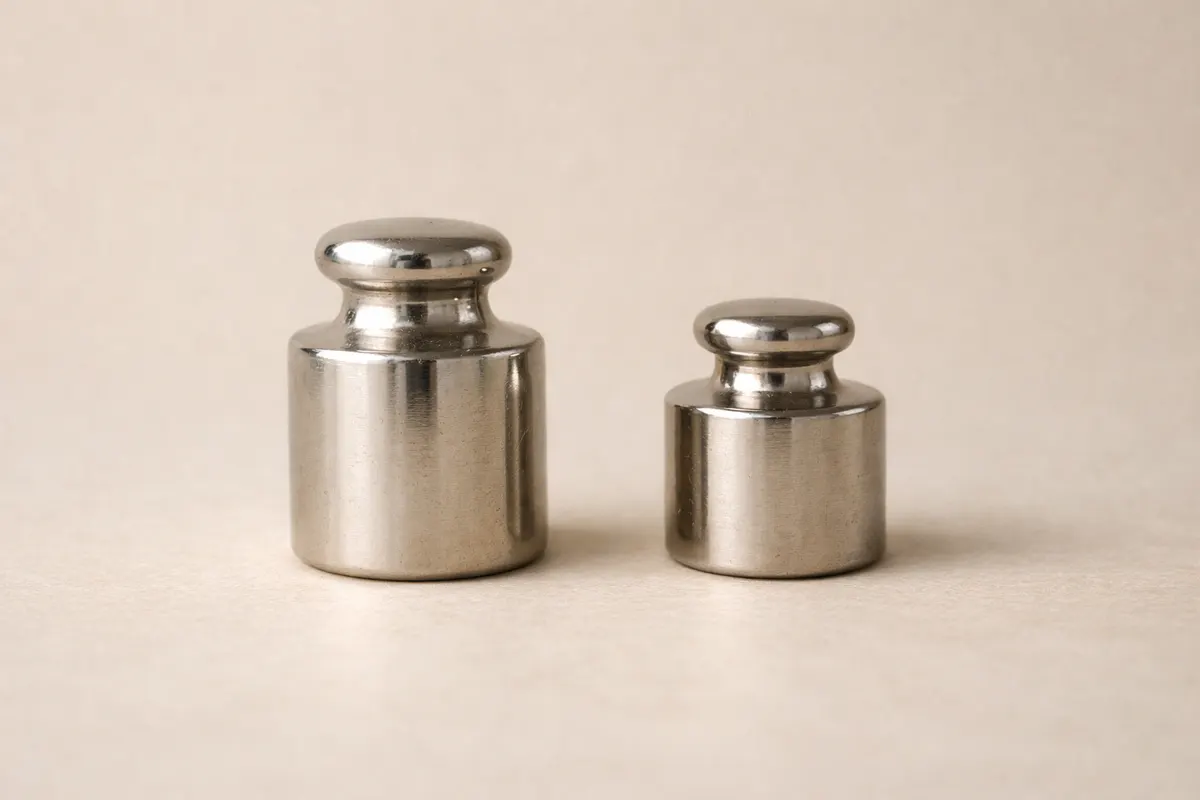
Quick answer: troy ounce vs ordinary ounce
A troy ounce (abbreviated ozt or oz t) is the unit used for precious metals and equals exactly 31.1034768 grams. An ordinary avoirdupois ounce (commonly written oz) equals exactly 28.349523125 grams. That means one troy ounce is heavier by 2.753953675 grams — roughly a 9.7% difference.
When you see a weight label for gold, check whether it explicitly says ozt, oz t, or troy ounce. If it just says oz, the label is ambiguous: many consumer scales, jewelry descriptions, and older items use the avoirdupois ounce. Confusing the two can make a 1 ozt coin appear lighter or heavier if you treat the number as the other ounce.
A photo can sometimes prove which ounce was used — for example, if the scale readout shows “ozt” or the stamp on a bar or coin says “1 ozt.” But a photo alone usually cannot prove which ounce was intended when labels are missing or ambiguous; follow-up checks or a conversion with a reliable scale or calculator is the safe next step.
What troy ounce vs ounce actually measures
The difference between troy and avoirdupois ounces is strictly a unit convention: both measure mass, but their gram values differ. Historically the troy system (troy ounce and troy pound) was used for precious metals and gems. Today gold dealers, mints, and commodity markets quote gold in troy ounces; many consumer products and kitchen scales use avoirdupois ounces.
Practically, the troy ounce is the standard in the precious‑metals world. When you see a coin or bullion piece labeled “1 oz” and it is a branded gold coin (for example bullion issued by a mint), the industry expectation is that the label means one troy ounce unless the issuing documentation says otherwise. For casual items, jewelry, or mixed listings, “oz” may mean the lighter avoirdupois ounce, so context matters.
A key implication: converting between grams and ounces requires knowing which ounce is intended. The exact conversion factors to memorize or use in a calculator are: 1 troy ounce = 31.1034768 g, and 1 avoirdupois ounce = 28.349523125 g. Using the wrong factor is the most common source of buying, listing, or appraisal confusion.
Key clues to identify which ounce is used
When you only have photos or a short description, look for these highest-confidence clues first. They help you decide whether to treat a listed weight as troy ounce or ordinary ounce before converting.
Some clues are direct (explicit unit labels), others are contextual (type of item and where it’s sold). Use a combination of clues rather than a single item of evidence when possible.
- Explicit scale readout: If a digital scale display shows “ozt,” “oz t,” or “troy oz”, treat the value as troy — this is the clearest single-piece evidence.
- Stamped markings: Hallmarks, mint stamps, or bar labels that read “1 ozt,” “1 troy oz,” or use the mint’s standard troy phrasing are reliable.
- Context: Coins and minted bullion sold by reputable dealers are almost always troy ounces; commodity listings on metal exchanges use troy ounces.
- Product type: Jewelry weight listings from general marketplaces often use avoirdupois ounces or grams. Jewelry sellers increasingly use grams to avoid confusion.
- Scale model and setting: Photos of a scale with unit settings visible can show whether the device uses g, oz, or ozt. Many consumer scales default to oz (avoirdupois).
- Ambiguous labels: If an item only says “oz” without context, treat that as ambiguous and confirm before converting or valuing.
Step-by-step workflow
Step 1 — Inspect the evidence: Check the photo, listing, or packaging for explicit unit labels. Look for “ozt,” “troy oz,” or “troy ounce.” If you see only “oz,” note the item type (coin, bullion, jewelry) and seller type (dealer, marketplace, private) to guide your next step.
Step 2 — Cross-check the context: For minted coins and official bullion, assume troy unless documentation says otherwise. For jewelry and mixed-market items, prefer grams if available or ask the seller which ounce they mean. If you can, request a clear photo that shows the scale readout or the piece’s stamp.
Step 3 — Use the correct conversion factor: Convert ounces to grams with the exact numbers: multiply troy ounces by 31.1034768, or multiply avoirdupois ounces by 28.349523125. For quick mental math, remember 1 ozt ≈ 31.10 g and 1 oz (avoirdupois) ≈ 28.35 g.
Step 4 — Reconcile totals: If an item’s listed grams don’t match the provided ounces, that’s a red flag. For example, a label that claims “1 oz (28.35 g)” attached to a minted gold coin likely used the ordinary ounce by mistake; the correct troy conversion would be ~31.10 g. Ask for clarification or weigh independently.
Step 5 — Use a trusted calculator or device: If you cannot confirm the unit visually, use a precise scale that supports both grams and ozt, or use the Gold Detector weight calculator to avoid manual errors. Treat the calculator as a conversion aid, not as proof of authenticity.
Worked examples: common scenarios and conversions
Example 1 — Minted bullion coin: A listing says “1 oz gold coin” and shows a modern mint logo. Industry convention treats this as 1 troy ounce. Convert: 1 ozt × 31.1034768 = 31.1034768 grams. If the listing also states “31.1 g,” those numbers align and reinforce that the seller used troy ounces.
Example 2 — Market jewelry listing: A second-hand marketplace listing reads “0.5 oz earrings (14 g).” If the seller used the ordinary ounce, 0.5 oz × 28.349523125 = 14.17476 g, which matches 14 g rounding; if they meant troy, 0.5 ozt × 31.1034768 = 15.5517 g, so the grams shown help identify which ounce was used.
Example 3 — Scale photo ambiguity: A user photograph captures a round bar on a digital scale that reads “1.0 oz” with no other unit indicator. If the operator used a consumer kitchen scale, it likely displays avoirdupois ounces; the same reading on a professional metals scale could mean troy ounces. Ask for a photo of the scale model or a second readout showing grams or ozt to be sure.
Example 4 — Multi-piece listing: A lot listed as “3 oz total” with three small pieces might mean 3 avoirdupois ounces (≈85.05 g) or 3 troy ounces (≈93.31 g). When totals matter, request a gram measurement or separate weights per piece so you can confirm the conversion precisely.
- Quick check: When grams are provided alongside oz, recalculate to see which ounce was used.
- When buying, prefer listings that provide grams or explicitly state ozt for precious metals.
- If in doubt, ask the seller for a photo showing the scale unit or for a grams measurement.
Limitations: what weight and photos cannot prove
Weight alone does not prove authenticity, purity, or market value. A measured mass that matches the expected grams for a troy ounce does not confirm that a piece is actually gold or that it carries the stated fineness. Many alloys and base‑metal counterfeits can be made to match a target mass; only specific composition tests and trusted provenance can address authenticity and purity.
A photo can show a scale readout, a stamped weight, or a hallmark, but photographs can be misleading: readouts can be altered in listings, stamps may be poorly struck or forged, and perspective/lighting can hide marks. Treat photographic evidence as suggestive, not definitive. When the stakes are high, request independent verification from a reputable assay service, refiner, or experienced appraiser.
Be careful with marketplace claims. Sellers sometimes reuse templates that say “1 oz” regardless of the actual unit intended. The safest approach for comparison is to convert the numbers with clear unit labels and, where possible, weigh the item yourself or ask for a grams measurement from a reliable scale. For background on visual checks and lookalikes, the article “Gold vs Pyrite: Visual Clues, Lookalikes, and Next Steps” can help you spot obvious visual red flags (https://golddetector.app/blog/gold-vs-pyrite).
Finally, avoid destructive home testing. Scratching, acids, or improvised density tests can damage items and still fail to conclusively establish purity. Use weight checks and visual clues as part of a non‑destructive first pass, then escalate to professional testing when needed.
- High confidence from photos: clear “ozt” readout or a mint’s troy‑labeled stamp.
- Partial confidence: grams and an “oz” label that match troy math — still verify source.
- Low confidence: single “oz” label with no grams, no stamp, or ambiguous seller — ask for more evidence or an independent weigh.
Related guides
Check units with the Gold weight calculator
Before you compare or list weights, use the Gold Detector weight and unit calculator to convert between troy ounces, avoirdupois ounces, and grams. Treat the calculator as a safe conversion tool after you’ve collected visible clues; it helps avoid manual conversion errors but does not replace professional verification for authenticity or purity. Try the calculator at https://golddetector.app/tools/gold-weight-calculator.
Take the next step →Frequently asked questions
Is a troy ounce heavier than a regular ounce?
Yes. A troy ounce (ozt) equals 31.1034768 grams while a regular (avoirdupois) ounce equals 28.349523125 grams. A troy ounce is therefore about 2.754 grams heavier — roughly a 9.7% difference.
How can I tell if a scale is showing troy ounces?
Look for the unit label on the display: professional precious‑metal scales show “ozt,” “oz t,” or “troy oz.” If the display shows only “oz,” check the scale model or switch it to grams and compare readings. If the device lacks an ozt option, it is likely reporting avoirdupois ounces.
What conversion should I use to convert troy ounces to grams?
Use 1 troy ounce = 31.1034768 grams. For quick checks you can use 1 ozt ≈ 31.10 g. Multiply the number of troy ounces by 31.1034768 to get grams with full precision.
If an item says “1 oz” but the grams listed are 28.35, which ounce was used?
If the grams shown are 28.35 g, the seller almost certainly used the ordinary avoirdupois ounce (1 × 28.349523125 ≈ 28.35 g). For minted gold coins and bullion, that would be atypical; for jewelry or marketplace listings, it is common. When you see this mismatch, ask the seller for clarification or a grams photo before converting or relying on the weight.