

Types of Gold: How to Identify Color, Karat, and Form
A practical guide to types of gold, with photo-friendly visual clues, tests to try, common lookalikes, and when to get a professional assay.
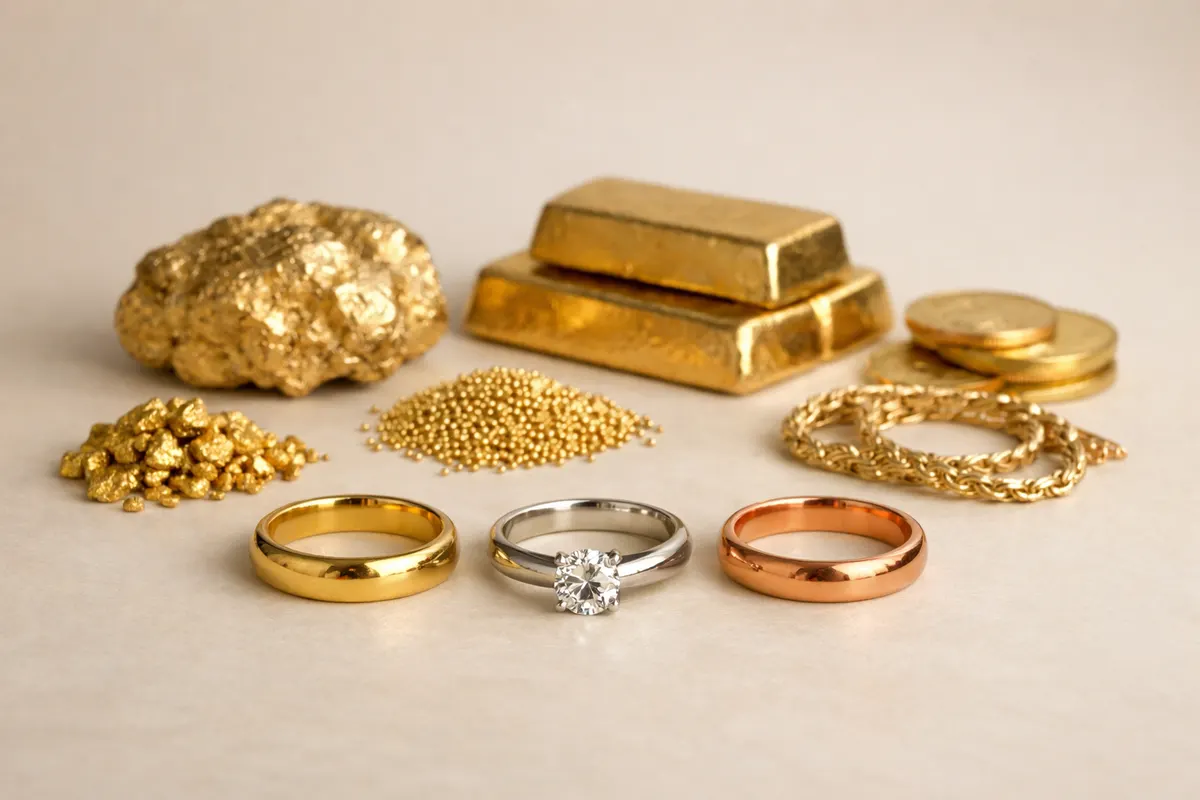
Quick answer: common types of gold
Types of gold fall into two practical categories you’ll see most often: pure or high-purity gold (bullion, nuggets, investment bars) and gold as an alloy used in jewelry (18K, 14K, 10K). Jewelry grades mix gold with copper, silver, palladium or other metals to change hardness and color. Separate but common in the field are gold-plated or gold-filled items, where a thin layer of gold covers a base metal.
If you only have a photo, high-confidence identifications are limited to obvious signals: natural gold nuggets with typical rounded surfaces and heavy relative size, stamped jewelry with clear hallmarks (for example 18K or 750), or items showing wear that exposes a different metal underneath (sign of plating). Many situations require simple tests—weight, magnetism, a visible hallmark, or a close-up of an exposed edge—to move beyond a provisional guess.
For quick triage: look for color and hue (warm yellow to rosy), consistent weight relative to size, stamped karat marks, and lack of rust or green corrosion. Use those clues to prioritize a safer next step: a non-destructive check such as a magnet or an app-assisted photo check, followed by an acid test, electronic tester, or professional assay if value or authenticity matters.
- Solid high-purity gold: bright deep yellow, heavy for size, no rust or flaking.
- Jewelry alloys (18K, 14K, 10K): vary in color and hardness depending on alloying metals.
- Gold-plated or vermeil: thin gold layer over base metal; look for flaking, worn edges, or different-color exposures.
- Fool’s gold (pyrite) and some sulfide ores: brassy, crystalline, often brittle—see a professional for ore samples.
Gold types: what they are and why it matters
When people ask about types of gold they usually mean two things: the metal’s purity (how much pure gold is present) and the metal’s form (nugget, coin, jewelry, ore, plating). Purity is expressed as karat (K) in jewelry: 24K is essentially pure gold, 18K is 75% gold, 14K is 58.3% gold, and 10K is 41.7% gold. The remaining percentage is alloyed metals that change color, hardness, and price.
Color names—yellow gold, white gold, rose (pink) gold, green gold, and electrum—are shorthand for the dominant alloy mix. White gold is typically mixed with nickel, palladium, or silver and often plated with rhodium for brightness. Rose gold contains copper and shows a warm pink hue. Recognizing the color family helps narrow likely karat ranges but cannot prove purity on its own.
Form matters: nuggets and bullion are usually handled as commodity-grade gold and valued by weight and purity. Jewelry’s value depends on karat, craftsmanship, brand, and market conditions. Plated or filled items are lower-value and can look similar in photos—thin wear at the edges, different-color metal where the plating wore off, or visible seams in chains often reveal plating.
- Karat vs. carat: karat (K) measures gold purity; carat (ct) can measure gemstones—don’t mix them up.
- Common jewelry marks: 24K, 22K, 18K, 14K, 10K, 750 (18K), 585 (14K), 417 (10K).
- Forms: bullion (bars/coins), jewelry (rings, chains), nuggets, ore, plated/filled, vermeil.
Gold visual clues to check in photos
Photos can reveal many useful visual clues when they’re sharp, well-lit, and show scale. Start by checking color consistency across surfaces. Solid or properly alloyed jewelry usually shows a consistent color across edges, inside bands, and near hallmarks; plated items often show a slightly different base metal at worn or thin spots.
Texture and surface detail are also telling. Natural nuggets show irregular surfaces, pitting, and smoothing from abrasion. Manufactured gold has smoother, machined surfaces and, in jewelry, visible solder lines and hallmarks. Pay attention to tiny flaking, green or black corrosion near contact points, and any exposed base metal along joints or sharp edges.
- Color hue: warm deep yellow (higher gold content), pink tint (rose gold), pale white/silver tint (white gold or plating).
- Hallmarks: look for karat stamps (e.g., 18K, 750) and maker marks—clear stamps raise confidence.
- Edge exposure: worn edges that reveal different color metal almost always indicate plating.
- Weight clues in photos: compare size to a known object (coin, ruler) to judge heft; gold is heavy for its size.
- Surface behavior: oxidation, rust, or flaky paint suggests base metals rather than gold.
- Crystal structure on ore: cubic or sparkly crystals often indicate pyrite or other minerals, not native gold.
Step-by-step workflow to identify types of gold
A staged workflow keeps risk low, puts the best evidence up front, and tells you when to stop and ask a pro. Start with non-destructive, low-cost checks you can do from a photo or at home: better photos, scale reference, and visible hallmarks. If you progress to physical tests, begin with non-invasive methods such as a magnet test and careful visual inspection under magnification.
If non-destructive checks are inconclusive and the item’s value justifies it, move to controlled tests: a light scratch test in an inconspicuous area with a testing stone and a small drop from an acid test kit can indicate a purity range. Electronic testers or specific gravity (density) measurements give another layer of evidence. Reserve destructive tests and professional assays (XRF or fire assay) for high-value items or when legal/insurance certainty is needed.
- 1) Improve the photo set: take close-ups of hallmarks, edges, and any worn areas; include a ruler or coin for scale.
- 2) Check hallmarks and stamps under magnification; record them and compare to standard hallmark lists.
- 3) Do a magnet test: gold is non-magnetic; strong attraction usually indicates a magnetic base metal or a magnetic core.
- 4) Compare weight to expected density: use a kitchen scale and a water displacement or specific gravity calculation for a rough check.
- 5) Do a streak test on unglazed ceramic to compare color of streak (for ore samples only; avoid with finished jewelry).
- 6) If safe and necessary, use a small acid test on an inconspicuous spot—wear gloves, work in a ventilated area, and follow kit instructions carefully.
- 7) For high-value or questionable pieces, seek XRF analysis or a certified assayer; XRF is non-destructive and gives an alloy breakdown, while fire assay is destructive but definitive for purity.
Examples
Example 1 — A photographed ring with a tiny stamp inside the band: If the photo clearly shows a 14K or 585 stamp, that’s a reliable starting point. Check edges for different-color metal showing through; if none, weigh the ring if possible and compare to a similarly sized known 14K ring. When stamps are clear and edges consistent, a non-destructive electronic tester or a shop check is often enough.
Example 2 — A bright yellow nugget from a pan photo: Nuggets typically show rounded edges, smooth weathering, and do not form sharp cubic crystals like pyrite. If the photo includes a scale and the piece appears heavy for its size, it’s likely native gold. For ore-like samples that show crystals, consult a mineral identification guide or the Gold vs Pyrite article for visual checks before investing in lab testing.
- Example 3 — A thin chain with worn plating: close-up photos reveal a darker core metal at solder joints—likely gold-plated. Plate usually peels at clasp links and rounded bends.
- Example 4 — A coin or bullion bar: look for mint marks, consistent edges, and precise lettering. Authentic bullion has standardized weight and dimensions you can check against specifications.
- Example 5 — A mixed-metal antique piece: solder lines of different color and small filler patches can indicate repairs with non-gold metals; these lower the piece’s metal purity even if the visible surface looks gold.
Limitations
Photos alone cannot certify purity or market value. Surface appearance is easily altered by lighting, camera white balance, coatings, or even deliberate re-plating. Many lookalikes—brass, bronze, certain copper alloys, and pyrite—can mimic gold’s color in photographs but differ completely in density and composition.
Some basic tests have blind spots: magnet tests only detect ferromagnetic fakes and won’t distinguish between gold alloys and non-magnetic base metals. Acid tests require skill and can damage delicate or collectible items. Electronic testers and XRF give better data but have limits: surface plating can skew XRF readings if the instrument does not sample past the coating; fire assay is destructive and reserved for when absolute purity evidence is needed.
When to stop and get professional help: if the item might be high-value, if legal/estate issues are at play, or if test results conflict, seek a certified assayer, reputable jeweler, or a lab that offers XRF or fire assay. For ore and field finds, bring a sample to a mineralogist or mining assay lab rather than relying on photos alone.
- High-confidence outcomes from photos: clear hallmark, distinctive nugget morphology, visible plating wear.
- Partial-confidence outcomes: consistent color and reasonable weight estimate—use non-destructive tests next.
- Low-confidence outcomes: ambiguous color, shiny crystalline surfaces (possible pyrite), or photos lacking scale—professional testing recommended.
- Safety note: avoid household acids or improvised tests; use proper kits and PPE or leave tests to professionals for valuable pieces.
Related guides
Next step: confirm purity or estimate scrap value
If you want a closer estimate after your visual checks, consider using the Gold Karat, Purity & Scrap Value Calculator to convert measured weight and karat into a scrap-value range. Treat the calculator as a decision aid—not a final appraisal—and use its result to decide whether to pursue XRF testing or a certified assayer for definitive verification. Visit https://golddetector.app/tools/gold-calculator to run the numbers and see typical price ranges based on common karats.
Take the next step →Frequently asked questions
How can I use a gold identification guide when I only have a phone photo?
Treat a guide as a triage tool: follow its photo checklist to capture hallmarks, worn edges, and scale references. Use the guide to prioritize which non-destructive checks to try first—magnified hallmark review, magnet test, and weight comparison—then decide if you need an acid test, electronic reading, or a professional assay. Always note lighting, reflections, and any coatings in the photo metadata; these help experts interpret images remotely.
Can I tell if a ring is solid gold or gold plated from a single picture?
Sometimes. A single high-quality close-up showing a worn edge or exposed base metal can reveal plating. Clear hallmarks (e.g., 18K, 750) raise confidence the piece is gold alloy, while inconsistent color at joints or a darker metal showing through typically means plating. If the picture lacks scale or the worn areas aren’t visible, a photo alone is inconclusive—follow up with a magnet test or professional inspection.
What visible signs in photos suggest a piece is an alloy like rose or white gold rather than pure gold?
Alloyed gold will show a consistent tint across the entire piece: a pinkish cast for rose gold (high copper content) or a paler, silver tone for white gold (nickel, palladium, or silver). Rhodium plating on white gold can be very bright; look for subtle yellow at wear points as evidence it’s plated. Pure 24K gold is usually a richer, deeper yellow and is softer, so manufactured pieces that look very rigid and scratch-resistant are often alloys.
What’s the safest at-home test I can do before paying for a lab assay?
Start with these safe checks: take more photos (hallmarks, edges, scale), perform a magnet test to rule out magnetic base metals, and record weight and dimensions for a specific gravity check if you can measure displacement. These non-destructive steps usually tell you whether professional testing is justified. Avoid strong acids or improvised chemical tests on valuable or antique items—those can damage the piece and reduce its value.